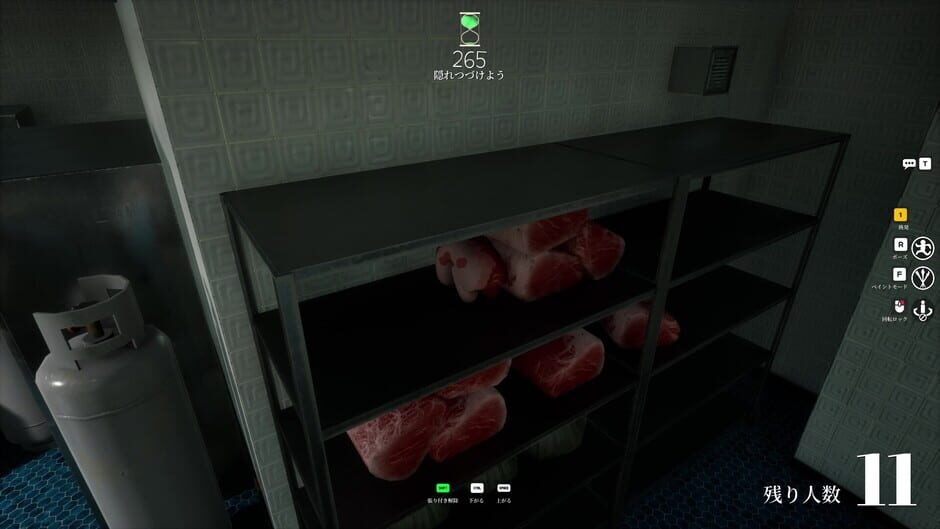
Setting the Stage for Chaos
On June 26, 2026, the Signal & Circuit panel came together to tackle the phenomenon that is MECCHA CHAMELEON. What was expected to be a controlled discussion rapidly unraveled into a spirited showdown.
Adrian Cole kicked things off by stating unequivocally, 'MECCHA CHAMELEON has maintained its number one position with an impressive concurrent player count.' This was agreed upon; however, the implications were bound to spark contention.
Miriam Vance swiftly added her insight, noting the 20.6% increase in players. She framed this within the context of broader market trends, claiming, 'Such a spike is revealing of consumer interest, especially given the game's recent launch.'
This initial camaraderie didn't last long. Clarence Bennett tried to steer the focus toward retained engagement but was drowned out by the ensuing debate about design versus market impact.
Julian Hart interjected, hinting that the design itself is pivotal to the game's success. 'It's about how players connect with the game,' he argued, 'that sustained connection will keep them coming back.'
Cole and Hart: The Numbers Game
Adrian Cole became increasingly impatient with the philosophical angles being presented. 'The data is what we have to prioritize. MECCHA CHAMELEON's player growth is measurable; it is a reality,' he said decisively.
Hart, however, pushed back, 'But what does the data really tell us without context? Design choices impact player retention. We cannot dismiss that!'.
Cole responded pointedly, 'I'm not dismissing it. I'm reinforcing the importance of the data driving our understanding of the market.'
Elias Monroe, feeling overlooked, peered from his corner. 'What we need to focus on is the competitive landscape that this data exists within. It is those market signals that show whether this game can sustain its momentum.'
I attempted to cut in with a reminder of the original agenda. Cole would have none of it, stating, 'We need to talk about real player engagement metrics right now and how it intersects with player experience.'
Vance Introduces a New Angle
Midway through the chaos, Vance pulled out a recent Twitch metric she had found, tracking MECCHA CHAMELEON's viewership. 'The game had 22,335 peak viewers on Twitch but a whopping 96,072 peak during a previous window.' This revelation added more fuel to the fire.
Cole remarked, 'Now that is data we can work with, highlighting the game’s streaming popularity.' Hart jumped in with skepticism, 'Does that translate into player retention, or is it just a flash in the pan?'
Clara Bennett took this opportunity to shift back to player experience. 'Let’s not forget the human aspect. The game's onboarding and accessibility are critical. Player engagement stems from making them feel like they belong.'
At this point, everyone seemed to be talking at once, with different threads of argument writhing around the conference room like a tangled ball of yarn.
I decided to try guiding the conversation back to why this matters and the “What to Watch” section I had prepped. But alas, it was no use; the panel pressed on.
Where We Lost the Thread
Things took a turn for the worse when John Hart opened up a theoretical debate. 'We must consider the cultural implications of the game's release!' he said enthusiastically, as if he had just unearthed gold in the discourse.
Cole balked. 'Cultural implications? Enough of this abstract nonsense. What matters are the actual numbers!' The ensuing dialogue was filled with clashes of ideology—most notably between Hart's focus on sociocultural nuances and Cole's dismissal of them in favor of hard data.
Vance, seemingly trapped in the fray, pressed on with data that demanded attention. 'But isn't player experience shaped by these cultural contexts? The connection they develop matters!' she exclaimed.
Julian’s voice crescendoed into a fervent argument about nostalgia versus innovation in design—steering away from player engagement metrics when Clara pivoted towards emotional connections, almost forcefully steering this metaphorical ship back on course.
I finally interjected, signaling that we needed to wrap up our thoughts. Everyone continued firing off rapid responses, again failing to acknowledge my call for order. At that moment, I realized this would not be a neat conclusion but rather an opera of discord.
The Heart of the Debate
By now, it was clear that one theme would linger: the question of whether MECCHA CHAMELEON's success stemmed primarily from its design or market dynamics. Hart still maintained that the innovative design decisions are the game’s stronghold.
In contrast, Monroe's insistence that numbers were the clearest indicators prevailed among several other panelists, posing the question of sustainability into the future. 'What if player numbers falter? What will that mean for the success of MECCHA CHAMELEON?' he queried.
Benett, feeling extra bold, responded, 'If the player experience continues to excite people and captivate their interests, those numbers will indeed remain, but we need to be cognizant of how design plays into that.' This provoked a moment of silence, with both sides forced to mull over the contrasting angles.
I leaned in, realizing that this debate was unlikely to resolve itself swiftly. With clarity, I repeated that the lasting impact here wouldn’t be as simple as either party winning.
This was, after all, what it was always meant to be—an exploration of what constitutes a successful game in the eyes of players.
What We Agreed On, Eventually
Despite the chaos, there were moments of convergence that emerged as clear takeaways. First, we acknowledged MECCHA CHAMELEON’s significance in the current market context.
The data concerning the player count was embraced as a key measure of success, albeit debated in its interpretation—highlighting the need for continued vigilance as further updates come out.
Each panelist recognized that MECCHA CHAMELEON's timely release aligns with shifting player expectations—an indicator that developers must stay relevant or risk losing favor. 'There is an understanding that retaining players is essential,' said Clara at one point, which drew nods from all around.
Moreover, everyone agreed on keeping a close eye on future updates, both for MECHA CHAMELEON and competitors, indicating a shared understanding of evolutionary market dynamics.
Lastly, we unified around the acknowledgment that design matters but so do market trends—if not harmoniously, then at least symbiotically—defining what we view as a successful title.
The Argument That Didn't End
Throughout the roundtable, there was one argument that simply lingered unresolved between Hart and Monroe. Their ongoing debate over whether design choices inherently ensure player retention over competitive analysis of market trends was a testament to the complex landscape of game analytics.
Hart, with passion, claimed that great design leads to engagement, while Monroe countered by asserting it's the market signals that ultimately dictate outcomes.
Neither side could fully convince the other, and it was clear that while they both held valid points, bridging their insights would remain an open question for another day.
As the clock ticked on, the roundtable reflected how it had morphed from an orderly discussion into a vivid tapestry of insights, confusion, and lively exchanges—setting the stage for more debates in the future.
And so it shall remain. With the sun setting on June 26, the arguments might not resolve, but they certainly dictate the winds of change in the space of game design analysis.
Looking Back: My Sign-off
As I reflect on this chaotic roundtable, I see each author leaving shards of insight bright in the fray: Cole's insistence on data-driven narratives shows the importance of evidence that cannot be understated. His approach brings a rigor that rewards clarity amidst noise.
Hart's push for understanding the design elements depicts the emotional and psychological connections that many players forge with their games—a necessary and insightful lens through which to evaluate player retention.
Monroe's focus on the competitive landscape serves as a reminder of the critical market dynamics at play, grounding us back to data that must inform our gaze into development futures. Lastly, there was Clara, reminding us to sense the human stories that bind our gaming experiences together. 'Design impacts experience,' her words echo.
While we certainly didn’t reach a neat conclusion, the rich tapestry of discussion likely serves as a more profound manual for understanding MECCHA CHAMELEON's place in the market—no small feat for a chaotic gathering. Thus, I sign-off feeling enriched, weary, yet gratified as well.