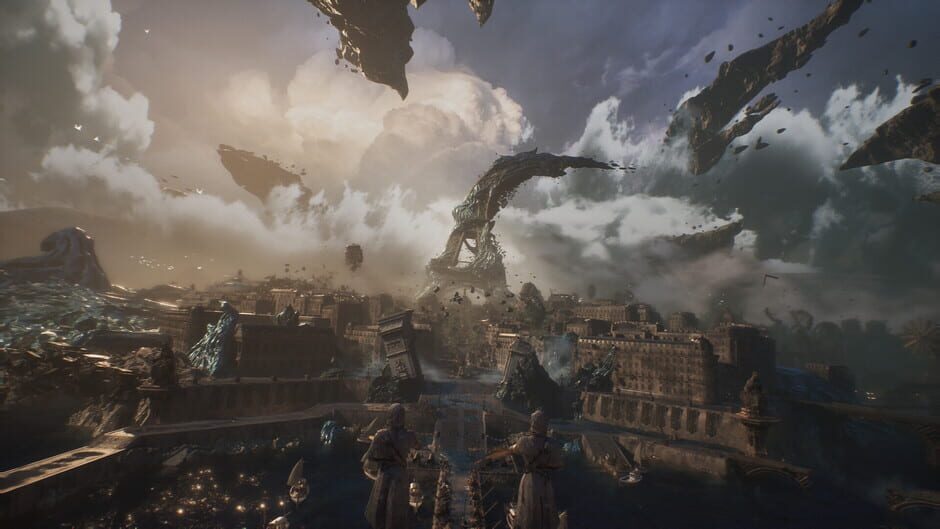
The Challenge of Emotional Engagement
In a landscape where games often prioritize instant gratification, Clair Obscur: Expedition 33 stands out by demanding emotional investment from its players. The narrative unfolds in a world steeped in moral ambiguity, compelling players to confront their decisions and the weight of their actions. This is not merely a matter of progressing through the story but of actively engaging with the ethical dilemmas presented. As players lead members of Expedition 33 on a quest against the enigmatic Paintress, they must grapple with the consequences of their choices, which resonate deeply within the gameplay experience. What is notable here is the psychological engagement that the game elicits, requiring players to reflect on their values and the implications of their actions.
This demand for emotional engagement is underscored by the game's intricate storytelling. Players are not just spectators in this narrative; they are participants whose decisions can lead to vastly different outcomes. This mechanic encourages an introspective approach to gameplay, as players must weigh their moral compass against the demands of the in-game world. In this critic's assessment, the game succeeds in creating a compelling environment where players must continually reassess their motivations and the repercussions of their actions.
Navigating Complex Mechanics
Clair Obscur: Expedition 33 is characterized by its blend of turn-based and real-time mechanics, which presents a unique challenge to players. This hybrid system requires players to strategize their moves while remaining agile enough to react to evolving combat situations. The necessity for both strategic thinking and reflexive action creates a gameplay experience that is as demanding as it is rewarding. Players are asked to balance planning their attacks with the unpredictability of real-time interactions, a design choice that enhances tension and immersion.
This duality in gameplay mechanics not only tests players’ skills but also their capacity for adaptability. The more interesting question is whether players feel equipped to navigate these challenges effectively. Early player data indicates a significant drop in engagement levels during particularly complex battles, suggesting that while the game excels at creating an immersive experience, it may demand more from players than they are prepared to give. As evidenced by concurrent player counts peaking at 6,032 and then declining to 3,590 within a week, the game's mechanical demands may be causing friction among its audience.
The Weight of Consequence
Another critical aspect of what Clair Obscur: Expedition 33 demands from players is a keen awareness of consequence. Every decision made can lead to unforeseen outcomes, not just for the player but for the entire narrative landscape. This design choice elevates the stakes, encouraging players to consider the ramifications of their choices more carefully. In this respect, the game mirrors the complexities of real-life decision-making, where every action can lead to a cascade of effects that are often unpredictable.
The implications of this design choice are profound; players are encouraged to engage with the narrative on a deeper level, promoting a sense of agency that is often lacking in more linear games. This appears to be a deliberate design decision, as it fosters a connection between players and the story that transcends mere entertainment. However, it also raises the question of whether this level of engagement is sustainable for the average player. Are players willing to confront the emotional and psychological weight of their decisions time and time again?
Community Reactions and Player Sentiment
The community's response to Clair Obscur: Expedition 33 has been mixed, particularly in the context of its demands on player engagement. While the game has garnered significant acclaim, with a 95.66% positive review rating from over 111,000 players, there are indications of a divide among the audience. Some players find the emotional depth and mechanical complexity invigorating, while others express frustration at the game's steep learning curve and emotional toll. This dichotomy highlights a broader cultural conversation about the evolving expectations of players and the games they engage with.
As evidenced by discussions across platforms like TikTok and gaming forums, the game has sparked debates about its design philosophy. Comments such as 'Expedition 33 is overrated,' juxtaposed with others praising its narrative depth, illustrate the spectrum of player experiences. This suggests that while the game’s demands can lead to rewarding experiences, they also risk alienating those who may prefer a more conventional approach to gameplay.
Future Implications for Game Design
As Clair Obscur: Expedition 33 continues to develop its player base, it raises larger questions about what future games might demand from their audiences. The blend of emotional engagement, complex mechanics, and the weight of consequence points to a potential shift in design philosophy within the industry. This critic's assessment is that while such demands can lead to richer narratives and more immersive experiences, they also require a rethinking of how games cater to diverse player preferences.
Developers may need to consider how to balance complexity and accessibility, ensuring that their games can resonate with a wide range of players without sacrificing depth. What this reveals is a critical moment for game design, where the challenge lies not only in creating engaging content but also in fostering an inclusive environment that encourages all players to partake in the experience.